
The 3 D’s of Dog Training: The Key to Reliable, Real-World Obedience
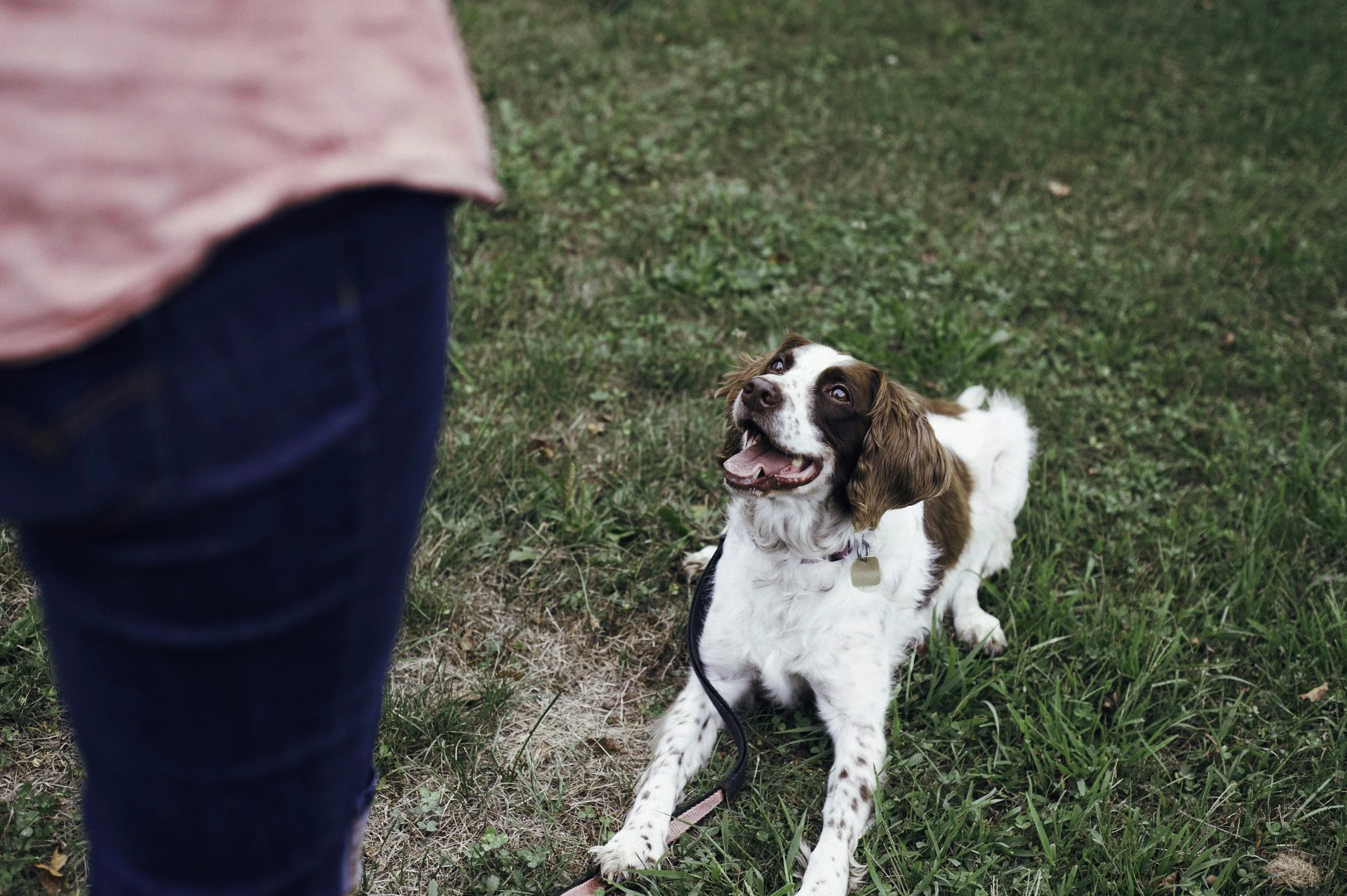
You’ve taught your dog to sit. They do it perfectly in your living room. But the moment you step outside—or add a single distraction—it’s like they’ve never heard the word "sit" in their life.
Sound familiar?
That’s where the 3 D’s of dog training come in. Distance, Duration, and Distraction are the foundation of building reliable obedience—not just in your kitchen, but in the real world where it actually matters.
What Are the 3 D’s?
The 3 D’s represent the three ways we increase difficulty in training:
Distance: How far away you are from your dog.
Duration: How long your dog holds a behavior.
Distraction: What’s happening around your dog.
Mastering these ensures your dog doesn’t just know a command—they can perform it anywhere, anytime.
Why the 3 D’s Matter
Many training breakdowns happen because we ask for too much, too fast. If your dog can currently sit next to you for two seconds in a quiet room, but you suddenly expect them to stay across the yard while other dogs are playing nearby, you’ve skipped critical steps.
The 3 D’s create a structured progression that prevents confusion and builds your dog's confidence.
The Golden Rule: Only increase one “D” at a time.
This is where most people go wrong. If you increase distance, duration, and distraction all at once, your dog is set up to fail. Instead, change one variable while keeping the others easy. This keeps training clear, fair, and successful
Breaking Down Each “D”
1. Distance: Can Your Dog Listen From Afar?
Distance refers to how far you are from your dog when giving a command. Dogs don’t automatically "generalize" commands; a "sit" next to you feels very different to them than a "sit" from 20 feet away.
How to build it: Start close, then gradually increase space. Step back one step, then two, then move across the room, and finally across the yard.
2. Duration: Can Your Dog Hold the Behavior?
Duration is how long your dog maintains a command like Sit, Down, or Place. Without it, commands become momentary and lose their utility.
How to build it: Build slowly using a progression like 3 seconds, then 5, then 10 before offering a reward. This creates impulse control and stability.
3. Distraction: Can Your Dog Stay Focused?
This includes anything competing for your dog’s attention: other dogs, squirrels, loud noises, or new environments. This is where training becomes "real."
How to build it: Start in a quiet home, move to a backyard with mild noise, and eventually progress to public spaces like parks.
How to Apply the 3 D’s Correctly
Step 1: Teach the Behavior First Your dog must fully understand the command in a "sterile" environment before you ever try to add difficulty.
Step 2: Build Success Gradually Work each “D” independently. If you are working on Distance, keep the Duration short and the Distractions low.
Step 3: Reset When Needed If your dog struggles or "breaks" their command, you’ve likely asked for too much. Simply lower the difficulty and try again. Training should challenge them, not overwhelm them.
Step 4: Generalize the Behavior Practice in as many different locations as possible. This helps your dog learn that "Sit" means "Sit," regardless of where they are.
Where Balanced Training Fits In
Using a balanced training approach allows us to:
Clearly teach and reward the behavior using positive reinforcement.
Gradually increase the 3 D’s to "proof" the training against real-world variables.
Hold the dog accountable once they have demonstrated a clear understanding of the expectation.
This creates a dog that doesn't just perform during "training time," but lives it out in everyday life.
Common Mistakes to Avoid
Increasing multiple D’s at once (the fastest way to cause a breakdown).
Moving too quickly through the progression.
Training only in one environment and expecting perfection elsewhere.
Expecting reliability without "proofing" behaviors through the 3 D's first.
Final Thoughts
The 3 D’s are the difference between a dog that knows commands and a dog that is truly obedient. If you want a dog that listens at the park, on walks, and through the chaos of daily life, you must train with Distance, Duration, and Distraction in mind.
True training isn’t about perfection in a quiet room—it’s about reliability in the real world.
